Notes from the Practice · When Summer Settles In
Last week has been unusually hot in Copenhagen. The sort of weather that changes not only what we want to eat, but how we cook altogether. The stove stays off a little longer. Vegetables are treated more gently to stay crisp and fresh. Lunch stretches into the afternoon, and dinner starts later than planned. Tomatoes have finally found their sweetness, peas are everywhere, herbs seem to grow faster than they can be picked, and every visit ends with a few more things than intended. There is a point each year when the season stops hinting at what is coming, and everything arrives at the same time. We seem to have reached it. As always, I find myself taking notes. Not just on ingredients, but on combinations, small adjustments, and the ways the same produce behaves from one week to the next. Summer has a habit of reminding me that cooking is rarely about adding more. More often, it is about noticing more.
Two months ago, I cooked the first wedding of the season, and since then, the spring and summer menus have settled into their own rhythm. They continue to change, as they always do, but the direction feels clearer now than a month ago. At the moment, I'm drawn to generous flavours and strong contrasts: tomatoes with sesame and koji, vegetables over charcoal, cold soups built around herbs, flowers, and infused- or green oils. These are the weeks I look forward to every year. The produce requires less technique from the cook but more of their attention. It feels like one of the strongest moments of the year to gather people around a table, whether that's a long lunch in the garden, an evening outdoors with friends, or a celebration that carries on well after sunset. Looking back over the last few months, I'm reminded that the practice is always moving. Menus evolve. Seasons shift. The notes become a little more useful.
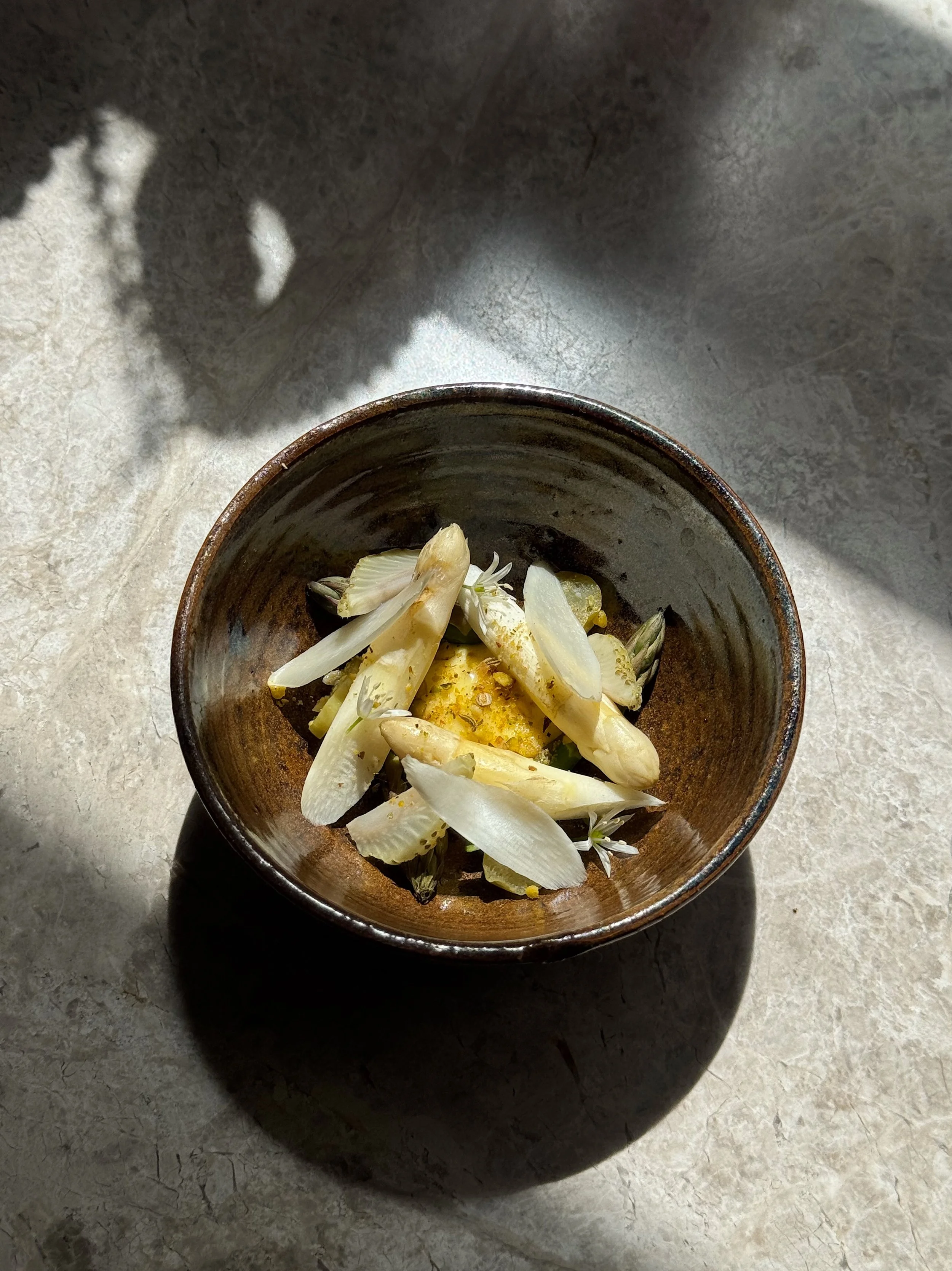
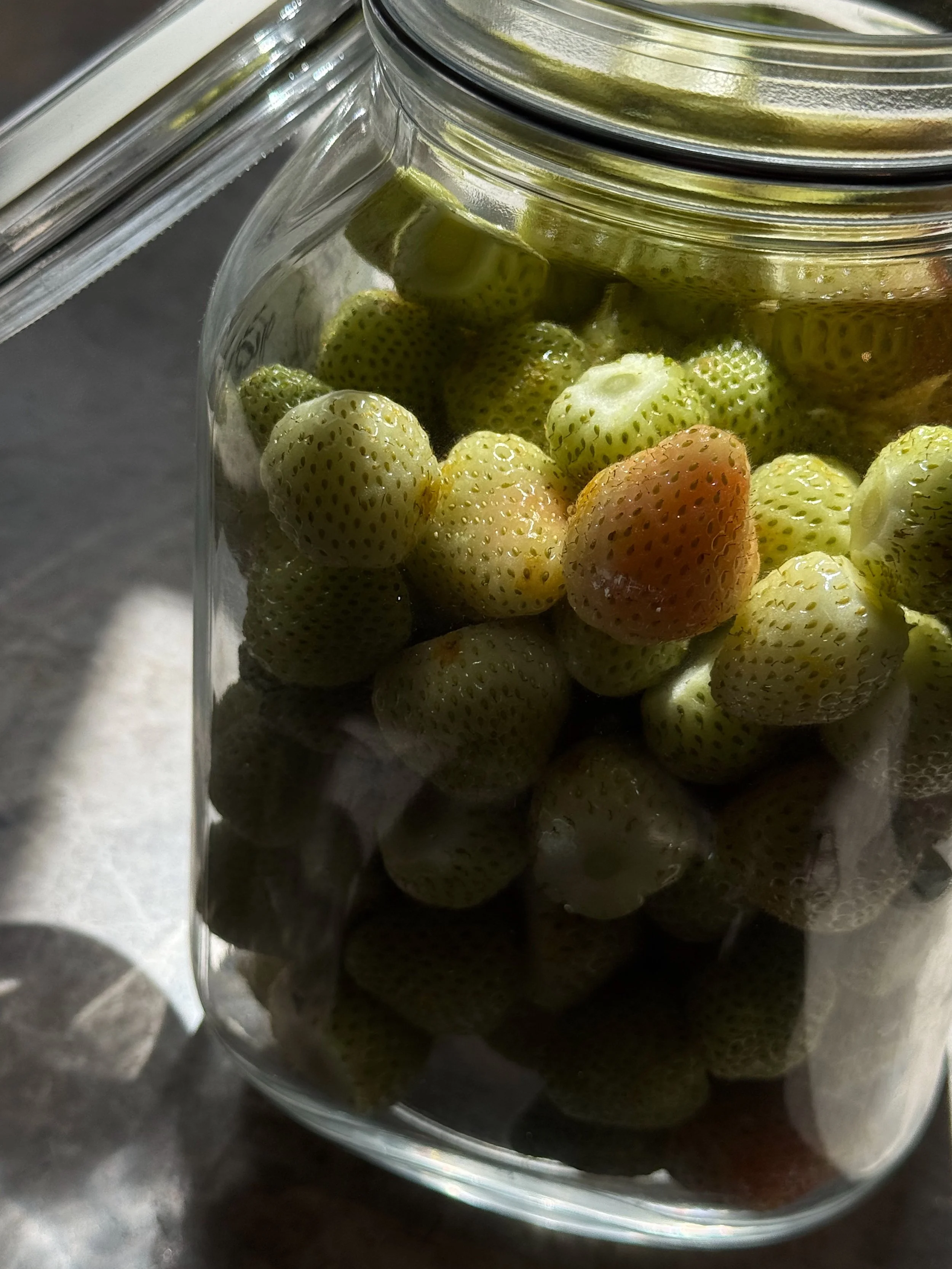
One note has stayed with me recently. Two dishes from the current menus share several ingredients: pickled strawberries, fermented white asparagus, and ramson flowers. Not because we are repeating ourselves, but because the same ingredients can serve different purposes depending on the menu. In the ten-course menu, white and green asparagus are paired with a Comté emulsion and pistachio dukkah. Here, the preserved elements bring freshness and lift to an otherwise rich and savoury dish. The wine often follows the same direction — a crisp but aromatic Savagnin from Jura or a sparkling rosé. In the six-course menu, tomatoes are dressed with sesame-and-koji vinaigrette, tomato dashi, and malt crumble. With fewer dishes available to tell the full story of a meal, the preserved elements take on a different role. They contribute texture, contrast, and complexity within the dish itself. Here, we often reach for a fresh, lightly chilled red, where the wine's fruit echoes the tomatoes while the malt provides enough depth to anchor it. The ingredients may be the same, but their purpose changes—one of the advantages of keeping notes.
The Wine Archive has continued to grow quietly alongside everything else. Rather than rushing to launch it, I've decided to let it develop as the cellar always has: patiently. Bottles continue to be sourced, tasted, stored, and followed over time before finding their way to the table. The ambition has never been to build a traditional wine shop, but rather a collection of bottles with provenance, maturity, and purpose. If you're looking for something specific, thinking about starting a cellar of your own, or simply curious about what is resting in the archive at the moment, I'd be delighted to hear from you. Access remains personal, and I suspect it will stay that way for quite some time.
Summer is largely spoken for now, and attention is already turning towards the months ahead. Autumn dinners, harvest gatherings, and, perhaps surprisingly, Christmas lunches are already finding their place on the calendar. If you're planning something later this year, now is a wonderful time to begin the conversation while there is still room to shape it properly. Whether it's a private dinner, a company gathering, a wedding, or simply a table you'd like to bring to life, I'd love to hear what you're thinking. Thank you for following along, reading these notes, and allowing Applied Notes to continue growing, one gathering at a time.
Marcus Palm,
Applied Notes
June 2026
The text was written in Danish and translated using AI and grammar assistants.